Milan Metro Lines M1 to M5: Map Logic, Hours and Transfers
Five lines, one urban fare and a handful of interchange stations do most of the work. Here is how to read the network and avoid the usual mistakes.
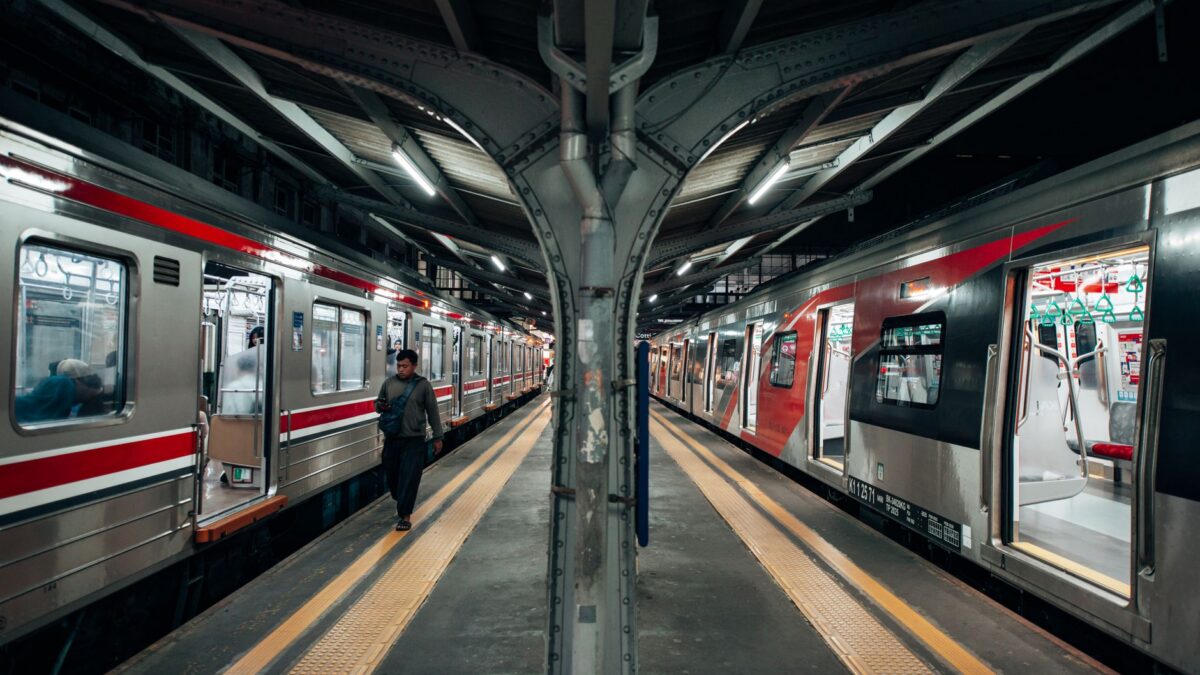
The Milan metro has five lines: M1 (red), M2 (green), M3 (yellow), M4 (blue) and M5 (lilac). They run daily from around 5:30 to about 00:30 as of November 2026, with M4 starting a little later, and all use the same urban ATM ticket of €2.20. M4 and M5 are driverless. Check atm.it for holiday timetables and works.
What are the five metro lines and where do they go?
Each line has a number and a colour, and the colour is what station signs and maps show. The names on the front of the train are the terminus stations, so read the direction before you board.
| Line | Colour | Role in the network |
|---|---|---|
| M1 | Red | East-west through Cadorna, Duomo and San Babila, with branches at both ends; the line with the most tourist stops |
| M2 | Green | Runs from the north-east through Centrale, Garibaldi and Cadorna to the south-west; the line for the railway stations |
| M3 | Yellow | Links Maciachini in the north with the south of the city through Centrale, Duomo and Porta Romana |
| M4 | Blue | Crosses the city from Linate airport to San Cristoforo in the south-west |
| M5 | Lilac | North-to-west arc from Bignami area through Garibaldi, Isola and San Siro |
Do not rely on this table for the exact end stations: extensions and works change them. The current map is on atm.it and in the ATM Milano app.
Where do you change lines?
Interchange stations carry the colours of both lines and a long walk between platforms is common. The ones you will use most:
- Duomo: M1 and M3, in the middle of the historic centre.
- Cadorna: M1 and M2, plus the Cadorna railway station used by the Malpensa Express.
- Centrale: M2 and M3, beside the main railway station.
- Garibaldi: M2 and M5, with the Porta Garibaldi railway station and the Passante lines.
- Loreto: M1 and M2.
- San Babila: M1 and M4.
- Sant’Ambrogio: M2 and M4.
- Sforza-Policlinico: M3 and M4.
- Zara: M3 and M5.
The M4 line gives access to Linate airport; its stops are covered in our M4 guide.
What time do the metro lines open and close?
As of November 2026, third-party schedules put the first trains at about 5:30 on M1, M2 and M3 and at about 6:00 on M4, with the last departures around 00:30 on those lines. M5 is reported with a slightly earlier finish. These times describe a normal day. On public holidays, around New Year and during strikes, ATM publishes a special timetable. If you are heading to a late event, check the last-train time in the app instead of trusting memory.
Frequency varies by time of day: trains come every few minutes at rush hour and less often in the evening and early morning. Reports put M4 at roughly one train every seven minutes in normal service, but ATM sets the real figures per time band. For December opening hours see our holiday guide.
What is the Passante ferroviario and how does it link to the metro?
The Passante ferroviario is a railway tunnel under the city that carries Trenord suburban trains, the S lines, between stations such as Garibaldi, Repubblica, Porta Venezia and Lodi TIBB. Within the urban stretch it accepts the ATM urban ticket. Beyond it, you need a regional ticket. The Passante is the fastest way to cross the centre from the northern or eastern suburbs without changing. The Trenord rules are explained in our regional trains guide.
Is the Milan metro accessible?
M4 and M5 are step-free by design, with platform doors. Lifts exist at many M1, M2 and M3 stations, but some older stations have only stairs or escalators, and a lift can be out of service. ATM publishes a station-by-station accessibility overview and live lift status in its channels. Anyone using a wheelchair or travelling with a pram should check the stations on both ends before leaving.
Which stations deserve a plan?
Duomo is crowded all day and the exits lead to different sides of the square, so look for the sign for Galleria or Via Torino before you climb out. Centrale has long corridors between the metro and the railway concourse. Cadorna joins three systems, so allow extra minutes for a transfer. Garibaldi is spread over two levels, and the walk from M2 to M5 is longer than the map suggests. Pickpockets work the busiest platforms and the metro cars at these four stations, as in most big European cities; keep bags closed and in front.
Bottom line
Learn the four big transfer stations first (Duomo, Cadorna, Centrale, Garibaldi) and the rest of the network follows. Pick the colour on the sign over the destination, and keep the last-train time in mind if you eat dinner out of the centre.
FAQ
Do I need a different ticket for each line?
No. One urban ticket covers every metro line, tram and bus inside the city for 90 minutes.
Are Milan’s metro lines open all night?
No. Service stops around 00:30 as of November 2026 and restarts early in the morning. Night buses cover some routes; check ATM for the current list.
Which line goes to the Duomo?
M1 and M3 both stop at Duomo. M1 is the red line and M3 the yellow.
Can I bring a bike or a suitcase on the metro?
Suitcases are allowed. Rules on bicycles are set by ATM and vary by time of day, so check the conditions of carriage on atm.it.