Castello Sforzesco: Hours, Tickets and What to See
The Sforza castle is free to walk through, but the museums inside have a ticket. Here is what it covers and when entry is free.
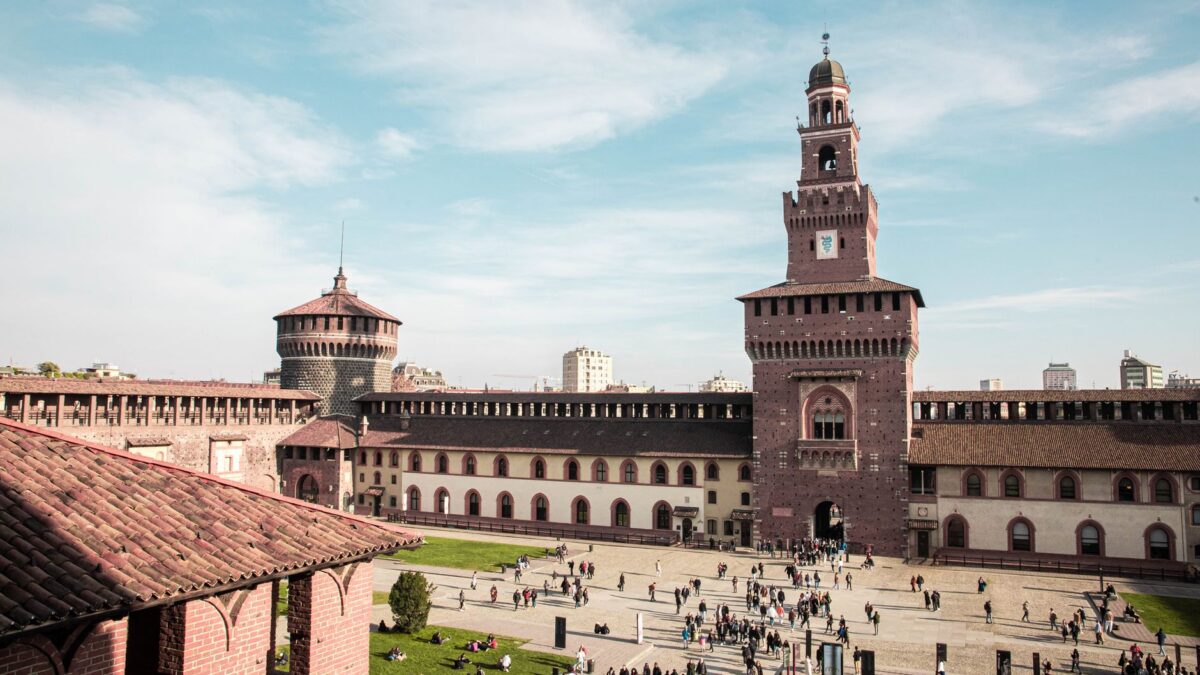
The Castello Sforzesco is free to enter as a courtyard and park route, while its civic museums have a ticket. As of November 2026, the Comune di Milano lists 10 euros as the full price for the Castello’s museums, following new tariffs that applied from 10 May 2026. Entry to the museums is free for everyone on the first Sunday of each month.
What does the Castello Sforzesco ticket include?
The ticket opens the Musei del Castello Sforzesco, a group of collections housed inside the fortress that was the Visconti and Sforza residence. The main ones are the Museo d’Arte Antica (sculpture and decorative art), the Pinacoteca (paintings), the Egyptian collection, the musical instruments collection and the furniture rooms. The headline work is Michelangelo’s unfinished Pietà Rondanini, shown in the former Spanish hospital wing.
| Part | Cost as of November 2026 |
|---|---|
| Courtyards and gardens | Free |
| Civic museums | 10 euros full; reduced about half price for categories such as students, ages 18-25 and over 65 |
| First Sunday of the month | Free for everyone |
| Second Tuesday of the month | Free for under-25s |
These rules come from the city’s announced museum tariff reform reported in the press. Check the official page for the Castello on comune.milano.it/castello before you go, since some details may differ by museum.
What are the Castello’s opening hours?
Guides agree that the museums are closed on Mondays and open the rest of the week until about 17:30, with last entry shortly before. They disagree about the opening time, with some saying 9:00 and others 10:00. The courtyards and gardens are said to stay open from early morning until about 19:30 every day. I could not confirm hours on the official site in November 2026, so treat these as approximate.
How long should you allow?
- Courtyards and a walk through to the park: 30 minutes.
- Pietà Rondanini and a few highlights: about 1.5 hours.
- Most of the museums: half a day.
Free Sundays draw large crowds, so go early. The Archaeological Museum on Corso Magenta is a separate site with its own ticket.
What is near the Castello?
Behind the castle lies Parco Sempione, the city’s central park, with the Arco della Pace at the far end. Our guide to Parco Sempione and the Arco della Pace covers the walk. From the front, Via Dante runs straight to the Duomo, and the Brera district is a short walk away, covered in the Brera guide. The nearest metro stations are Cairoli (M1), Lanza (M2) and Cadorna (M1 and M2).
What is the history of the castle?
The fortress was built in the 14th century by the Visconti and rebuilt from the 1450s by Francesco Sforza, who made it a ducal residence. Leonardo da Vinci worked at the Sforza court, and ceiling decoration in the Sala delle Asse is associated with him. Much of the building was heavily restored at the end of the 19th century, so the present look is partly a neo-medieval reconstruction. The main tower on the front is a 1900s rebuild of the original.
What is inside the museums?
- Museo d’Arte Antica: medieval and Renaissance sculpture, armour and carved works, with the funerary monument of Bernabò Visconti.
- Museo Pietà Rondanini: Michelangelo’s last sculpture, left unfinished at his death in 1564.
- Pinacoteca: paintings from the 14th to 18th centuries, including Lombard artists.
- Egyptian collection and musical instruments: smaller sections that suit a short second visit.
Room closures happen during restoration and exhibitions, so some works may be unavailable on the day you visit. Ask at the ticket desk about what is open.
Is it good for families and short visits?
Yes. The courtyard (Piazza d’Armi) is large and free, and children can run safely there. In summer the castle hosts evening events and open-air screenings. For a short visit, enter through the Filarete tower facing Via Dante, walk through the Cortile delle Armi, and exit through the rear gate into Parco Sempione. That route is free and takes about 20 minutes without stopping. Paid sections are accessed from the inner courtyards.
Which entrance and route should you use?
Most visitors arrive at the Filarete Tower on the Largo Cairoli side. The ticket office for the museums is in the Piazza d’Armi, the big inner courtyard. After the museums you can leave from the rear, which opens onto Parco Sempione, or walk back to Via Dante for restaurants. In summer, the heat in the courtyards can be strong, so keep the museum visit for the middle of the day, when the rooms are cooler.
Wheelchair access exists for the main courtyards and many museum rooms, but some levels need lifts that can be out of service. If this matters, contact the museums before the visit through the official page.
Bottom line
If you only have an hour, walk the courtyards for free and decide at the museum entrance whether the Pietà Rondanini is worth the ticket. Save museums for a weekday morning, and avoid the first Sunday unless free entry matters more than quiet rooms.
FAQ
Is the Castello Sforzesco free?
The courtyards and gardens are. The museums are free on the first Sunday of the month and for some groups.
Do you need to book?
Not for regular days. Free days may have limits, so look at the official page.
Is it open on Mondays?
The museums are closed on Mondays, according to most guides.
Where is the Pietà Rondanini?
In the Museo Pietà Rondanini inside the castle, the final sculpture by Michelangelo.