Mediolanum: How Roman Milan Became Capital of the Western Empire
Milan began as Celtic Medhelanon around 590 BC and became Roman Mediolanum, capital of the Western Empire. Its history and the ruins you can see today.
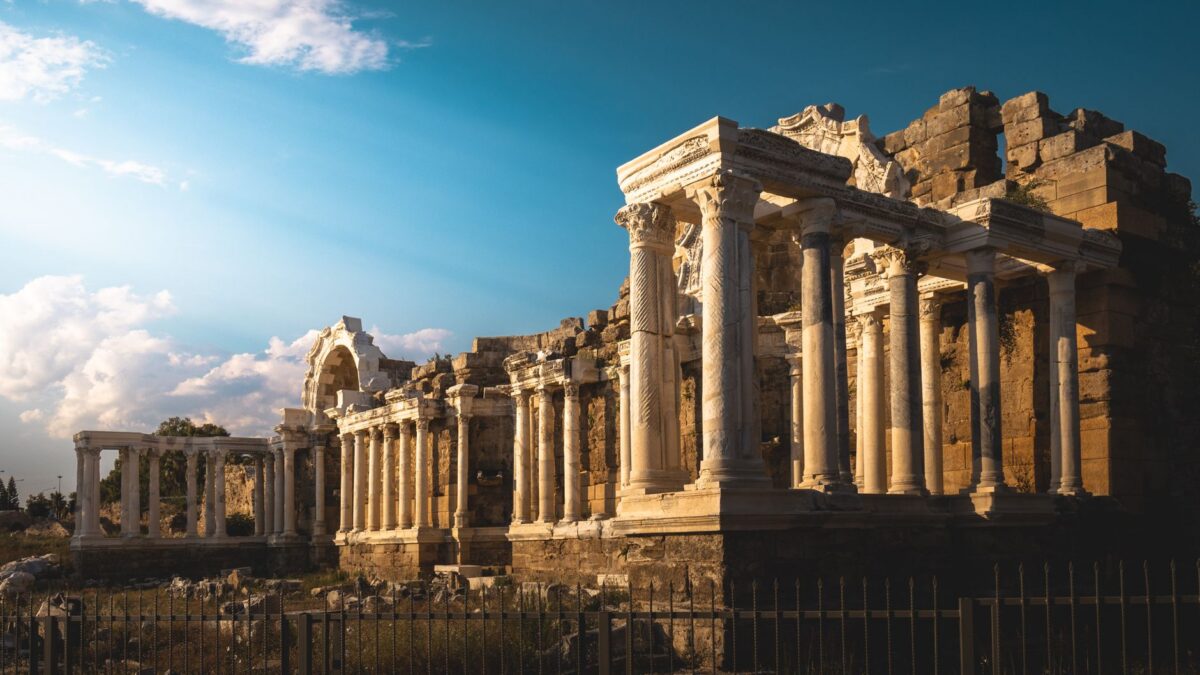
Milan started around 590 BC as Medhelanon, a settlement founded by a Celtic tribe of the Insubres group belonging to the Golasecca culture. The Romans captured it in 222 BC, Latinized the name to Mediolanum, and in the late third century AD made it the capital of the Western Roman Empire. Pieces of that Roman city still stand in churches, courtyards and a metro station in central Milan.
Who founded Milan, and what does Mediolanum mean?
The first settlers were Celts of the Insubres. A legend told by the Roman historian Livy says the Gaulish king Ambicatus sent his nephew Bellovesus into northern Italy with people from several tribes, and that Bellovesus founded the town during the reign of Tarquinius Priscus, whom tradition dates to 616 to 579 BC.
The village grew around a sanctuary, a wooded ellipse with a clearing at its center, aligned to astronomical points and used for religious gatherings. It measured 443 m by 323 m and lay near today’s Piazza della Scala. The curving line of Corso Vittorio Emanuele, Piazza del Duomo, Piazza Cordusio and Via Broletto may follow the south edge of that ellipse, according to the Wikipedia history of Milan.
The name is usually read as “settlement in the middle of the plain,” from Celtic medhe- (“middle”) and -lanon (“plain”). Another reading takes it as “place between watercourses,” since the Olona, Lambro and Seveso rivers and the Nirone and Pudiga streams run nearby. Some scholars link lanum to a Celtic word for an enclosed sacred area, which would make Mediolanum the central town or sanctuary of a tribe. About sixty Gallo-Roman sites in France had the same name, including Saintes and Évreux. An old tale ties the name to the scrofa semilanuta, a “half-woolly sow” that served as an emblem of the city, though scholars have long rejected that explanation.
How did the Romans take the city?
Roman forces under the consul Gnaeus Cornelius Scipio Calvus fought the Insubres and took the city in 222 BC, and the Insubrian chief submitted to Rome. The Romans went on to conquer the whole region and called it Cisalpine Gaul, “Gaul this side of the Alps.”
Mediolanum sat at a junction of the roads of northern Italy. The Greek historian Polybius described the surrounding land as rich in wine, grain and fine wool, with herds of pigs raised in its forests. In the age of Augustus the city was known for its schools and had a theater and an amphitheater measuring 129.5 by 109.3 m. A stone wall surrounded it by the time of Caesar.
Its rank rose under later emperors. Hadrian made it the seat of the prefect of Liguria, and Constantine made it the seat of the vicar of Italy. By the third century it had a mint, a horreum (a public warehouse) and an imperial mausoleum. In 259, legions under Emperor Gallienus defeated the Alemanni at the Battle of Mediolanum. The population was about 40,000 in AD 200, according to the Wikipedia article on Mediolanum.
Why did Milan become capital of the Western Roman Empire?
In 286, Diocletian moved the capital of the Western Empire from Rome to Mediolanum. He lived in Nicomedia in the east and left his co-emperor Maximian in Milan. Sources give slightly different start dates: the Wikipedia article on Milan says the city was capital from AD 284 to 402.
Maximian, who reigned from 286 to 305, rebuilt the city on a grand scale. He added a circus for chariot races of 470 by 85 metres, the Baths of Hercules and a large complex of imperial palaces. A new wall about 4.5 km long enclosed 375 acres and had many 24-sided towers. As capital, Milan grew to about 100,000 people and became one of the largest cities in Roman Italy.
What happened in Milan in AD 313?
Constantine issued the Edict of Milan from the city in 313, granting tolerance to all religions in the empire and opening the way for Christianity to become its main faith. He was there for the wedding of his sister to the eastern emperor Licinius. The first bishop of Milan with a firm historical record is Merocles, who attended a council in Rome that year.
In the fourth century the Arian controversy split the local Christians, and at times there were rival bishops. Bishop Ambrose, who died in 397, blocked the dedication of a basilica to Arian worship. The late fourth century also brought the basilicas of San Simpliciano, San Nazaro and San Lorenzo and the chapel of San Vittore. Augustine of Hippo was baptized in a baptistery whose ruins survive under the Duomo.
How did the imperial era end?
The Goths under Alaric I besieged the city in 402, and the imperial residence moved to Ravenna. Attila besieged Milan again in 452. The deepest break came in 538 during the Gothic War, when Uraia, a nephew of the Gothic king Vitiges, laid the city waste. The historian Procopius put the losses at 300,000 men. The Lombards captured Milan in 569 and made Ticinum, today’s Pavia, their capital, leaving Milan to be governed by its archbishops.
Where can you see Roman Milan today?
- The Colonne di San Lorenzo, a row of columns in front of the church of San Lorenzo, and the church itself with the chapel of Sant’Aquilino.
- The basilica of Sant’Ambrogio, with Late Antique mosaics in the chapel of San Vittore, the so-called Tomb of Stilicho built from a Roman sarcophagus, inscriptions, and the body of Ambrose in the crypt.
- A 16.6 m tower from Maximian’s circus, now inside the Convento di San Maurizio Maggiore.
- The remains of the amphitheater in an archaeological park.
- A stretch of wall with a 24-sided tower from Maximian’s time.
- Ruins of the imperial palace and of the Baths of Hercules, with more fragments in the archaeological museum.
- Pieces of wall and pavement in Piazza Missori and in the metro station of the same name, plus the crypt of San Giovanni in Conca and Roman stonework in the Archi di Porta Nuova.
Several of these sites are churches and museums with their own hours, so check our list of what is open in Milan over the December holidays if you visit in winter, and see whether a Milan city pass is worth it if you plan to add paid museums to the route.
Quick answers
How old is Milan?
The first settlement, Medhelanon, dates to around 590 BC. The Romans took it in 222 BC.
Was Milan ever the capital of the Roman Empire?
Yes, of its western half. Diocletian moved the western capital there in 286, and the court left for Ravenna after the Gothic siege of 402.
Why is it called the Edict of Milan?
Constantine issued it from Mediolanum in 313 while he was in the city for his sister’s wedding.
Checked against official sources in November 2026. Hours, prices and rules change: confirm on the official page before you go or apply.