Milan to Venice, Verona and Turin by Train: Times and Fares
How long the train from Milan takes to Venice, Verona and Turin, how Trenitalia, Italo and regional fares differ, and which city fits a day trip.
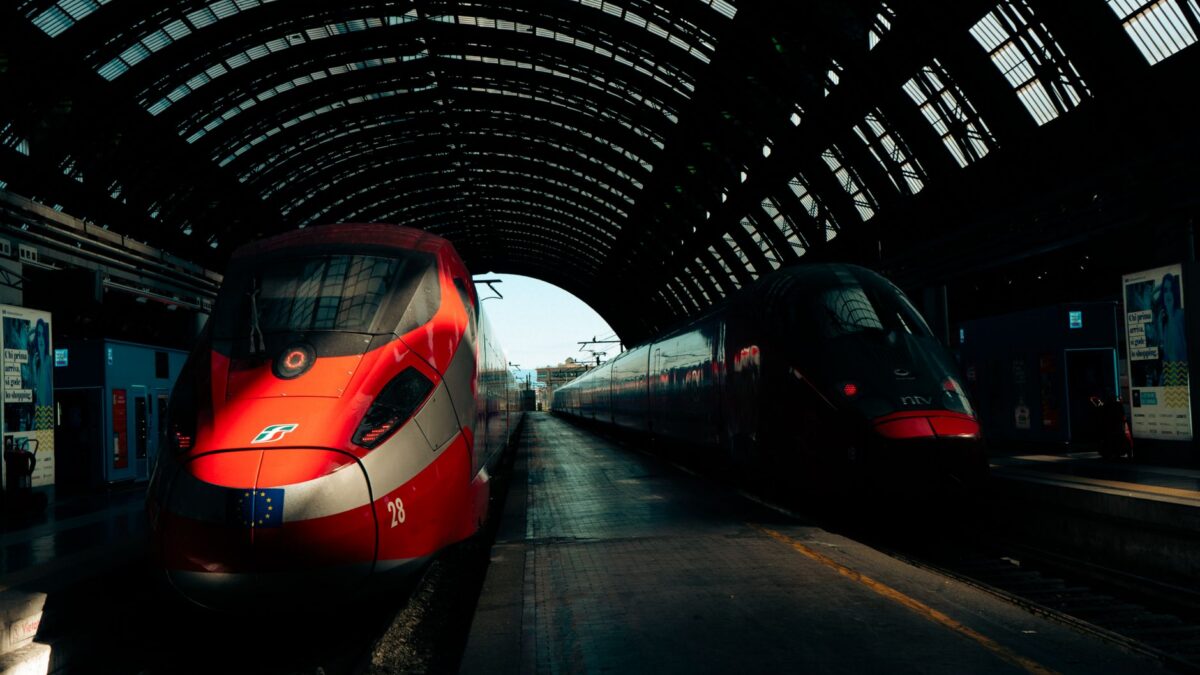
From Milano Centrale, the fastest trains take about an hour to Turin, around an hour and 15 minutes to Verona and roughly two hours and 25 minutes to Venice. Frecciarossa (Trenitalia) and Italo run on the high-speed lines, and regional trains are slower but cheaper and need no reservation. Advance fares on fast trains start around €20 to €30 for Venice, but prices rise sharply close to the date.
How long does the train take from Milan to each city?
| Destination | Fast train (Frecciarossa or Italo) | Regional train | Suits a day trip? |
|---|---|---|---|
| Turin (Torino Porta Nuova) | about 1 hour to 1 hour 10 minutes | about 2 hours | Yes, easily |
| Verona (Porta Nuova) | about 1 hour 15 to 1 hour 30 minutes | about 2 hours | Yes |
| Venice (Santa Lucia) | about 2 hours 15 to 2 hours 35 minutes | 3 to 3.5 hours or more, with changes on some routes | Possible but long; a night is better |
Times depend on the train and the stops. One source puts the fastest Milan to Venice services near 2 hours 13 minutes, and typical services around 2 hours 25 minutes. Check the operator’s timetable on the day you plan to travel. The regional times are approximate, and I could not confirm current regional fares for Verona and Turin, so look them up on the Trenitalia site.
What is the difference between Frecciarossa, Italo and regional trains?
Frecciarossa is Trenitalia’s high-speed train, and Italo is a private operator of similar trains on the main lines. Both require a ticket with a seat reservation and offer several price levels, from cheaper non-changeable fares to flexible ones. Regional trains, such as those marketed as Regionale or Regionale Veloce, have fixed prices and no seat reservation, but stop more often. Regional tickets must be validated before boarding if they are paper tickets, and they are valid on any train of that category on the day, which gives flexibility.
Reported advance fares for Milan to Venice are roughly €19 to €29 depending on the operator, and last-minute prices can reach €50 or more. Prices as of November 2026 vary by day and time, so use them only as a guide. Booking usually opens a few months in advance, and the cheapest tickets sell out first. Compare both operators before buying.
Which city suits a day trip?
Turin works as a day trip because of the one-hour train. Highlights include the Egyptian Museum, the Mole Antonelliana and the arcaded streets, and it has a different feel from Milan. Verona’s Roman Arena, Juliet’s house and the old town are compact and walkable, and the 1 hour 15 minute train gives enough time for a relaxed day. Venice is possible in a day but tiring: you spend about five hours on trains, and vaporetto and walking take time. If you can, stay overnight.
Does Venice charge day visitors?
Venice introduced an access fee for day visitors in 2024 and expanded the calendar in 2026. For 2026, reports say the fee applied on 60 days between 3 April and 26 July, from 8:30 to 16:00, at €5 if booked at least four days ahead and €10 if booked later, with overnight guests exempt. The dates for 2027 had not been confirmed when this was written, so check the Comune di Venezia’s official access-fee page before a spring or summer trip.
How do you buy tickets and avoid problems?
- Pick your date and compare Trenitalia and Italo for the same train time.
- Buy a fast-train ticket online or at the station. You will get a seat number and a time.
- For a regional train, buy at a machine or the app and validate paper tickets before boarding.
- Check for strikes. Italian rail strikes are announced in advance, and guaranteed services run in set windows. See our guide to strikes.
- Check that the departure station is correct: most fast trains leave from Milano Centrale, but some use Milano Porta Garibaldi or Rogoredo.
What about winter?
Fog in the Po Valley can delay trains, and December brings Christmas market crowds in Verona and Turin. Venice in winter is quieter, with the occasional high-water flooding (acqua alta) in autumn and winter. Check the weather and the operator’s notices before leaving. Our winter in Milan guide explains the regional weather.
Should you pick a fast or a regional train?
The choice depends on time and flexibility. Fast trains save one to two hours on the longer routes, and the advance fare can be close to the regional price if you book early. Regional trains make sense for Verona and Turin when you want to leave without a fixed time, because the ticket is valid on any train of that category for the day. For Venice, a regional journey with changes is a poor use of a day.
Luggage is simpler on fast trains, with racks at the end of each carriage. Seats are assigned, which matters at the weekend and around holidays. If your plans may change, a flexible fare costs more but can be modified. Read the fare conditions before paying, because changes to the cheapest fares may be limited or impossible.
Bottom line
For one day, choose Turin or Verona; for Venice, book a night or at least leave on the earliest train. Buy advance fare tickets as soon as booking opens for your date and compare both operators.
FAQ
How long is the train from Milan to Venice?
Around 2 hours 25 minutes on a fast train, and longer on regional services.
Is Italo or Trenitalia cheaper?
It varies by date and time. Compare both for the same journey, because the lowest advance fare can come from either.
Do regional trains need reservations?
No. They have fixed prices and no seat reservations.
Which station do Venice trains arrive at?
Most fast trains arrive at Venezia Santa Lucia in the historic centre; some stop at Venezia Mestre on the mainland, which is cheaper to reach by regional train but needs a transfer.