Basilica of Sant’Ambrogio: History, Towers and What to See
The Basilica of Sant'Ambrogio was founded by St. Ambrose in 379-386 and rebuilt in Romanesque style. What to see on the portico, facade, towers and altar.
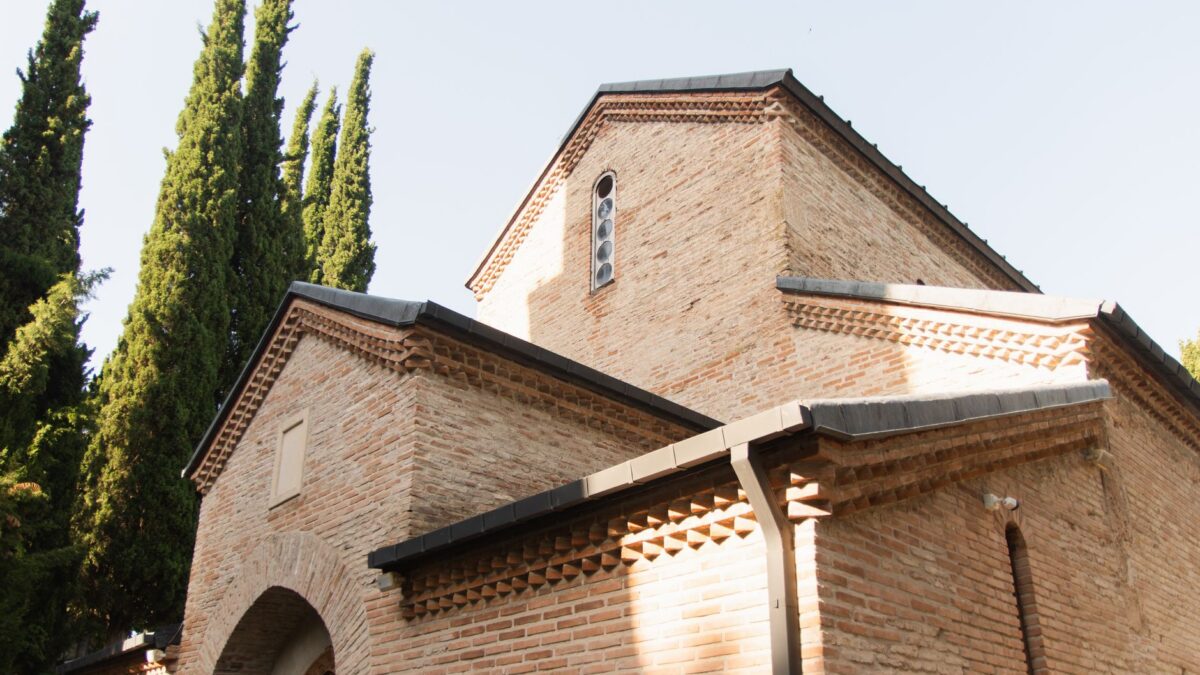
The Basilica of Sant’Ambrogio is one of the oldest churches in Milan, founded by St. Ambrose between 379 and 386 and rebuilt in the Romanesque style in the 12th century. It stands in the center of the city, and Ambrose, the bishop who built it, is Milan’s patron saint. Visitors come for the brick portico, the two unequal bell towers and an altar that sits roughly where it stood in Ambrose’s time.
Opening hours and entry rules are not part of the history below. For those, see our page on visiting the basilica, with hours and free entry, and confirm on the basilica’s own notices before you go.
Who built Sant’Ambrogio and why
Ambrose ordered the church in an area where many martyrs of the Roman persecutions had been buried, so its first name was Basilica Martyrum. When he arrived to take up the post of bishop, the churches of the region were split over Arianism and the Nicene Creed. Ambrose backed the Nicene side and wanted northern Italy to stay allied with the papacy, and he pushed that line from the pulpit and through building.
He put up a ring of churches around the city: Basilica Apostolorum (today San Nazaro in Brolo), Basilica Virginum (today San Simpliciano) and Basilica Martyrum, which was later renamed after him. A fourth, Basilica Salvatoris (later San Dionigi, demolished in the 17th century), is also credited to him, although it may not date from the 4th century. According to Wikipedia, these churches were dedicated in anti-Arian language and stood for the wealth and power of the pro-Nicene faction.
The full official name is long: Basilica romana minore collegiata abbaziale prepositurale di Sant’Ambrogio. Most Milanese just say Sant’Ambrogio.
How did the basilica change over the centuries?
The church first stood outside Milan’s Roman walls, and the city later grew around it. A monastery was set up on the grounds in 789, while a community of canons (priests attached to the church) kept its own identity. In the 11th century the canons took a rule of life and became Canons Regular, so two religious communities with different rules shared one basilica. The canons lived in the northern building, around their cloister, and the monks in the two southern buildings.
Monastery and church became large landholders in northern Italy and in what is now the Swiss canton of Ticino. In 1492 the Benedictines hired Donato Bramante, later the structural architect of St. Peter’s Basilica, to renovate the new rectory. On Aug. 4, 1528, the noble and popular factions of Milan signed the “Peace of St. Ambrose” here.
Allied bombing in August 1943 badly damaged the basilica, especially the apse and the area around it. A new pink building was then put up for the abbot’s offices and the museum.
What to see outside: portico, facade and towers
The present Romanesque church was begun around 1080. Its nave dates to about 1128 and the rib vaults to about 1140. The walls are mostly brick of different origins and colors, with some stone and white plaster.
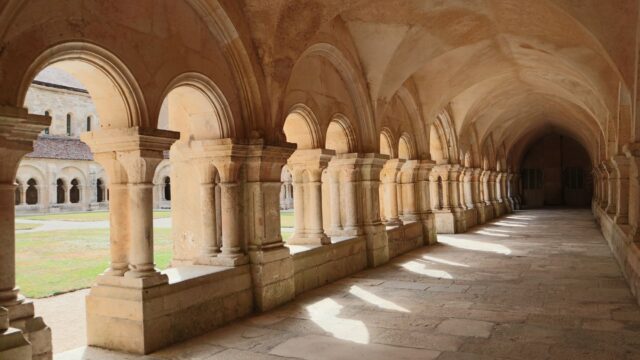
Before the entrance is a portico with arches on pillars flanked by half-columns. In early centuries it held the catechumens, people preparing for baptism who could attend only part of the Mass; that custom ended in the early 11th century, and the space was later used for civic and religious meetings. Look up at the capitals: they carry lions, wild boars, human heads, angels and plant or fantastic motifs older than the Romanesque style.
The facade has two levels of loggias. Bishops used the upper loggia to bless the people below. Under the porch, between the central door and the left aisle’s door, is the 15th-century sarcophagus of Pietro Candido Decembrio. The central portal has an arch with decoration of Sassanid (ancient Persian) inspiration.
The two bell towers tell the story of the two communities. The shorter one on the right, the Torre dei Monaci (Tower of the Monks), dates from the 9th century and looks like a defensive tower; the monks rang it to call people to their Mass, and offerings after Mass helped support them. The canons had no bell tower and could not ring bells until their own, taller tower on the left was finished in 1144. Its last two floors were added in 1889. An octagonal tower also rises over the east end of the nave.
What to see inside
The layout follows the old basilica plan: a central nave lit by high windows, two side aisles, a semicircular apse and smaller semicircular chapels at the end of each aisle, with no transept. Studies carried out in 1864 found that the nave and aisles match those of Ambrose’s original church. The atrium is from the 9th century.
The altar stands in about the same place as in Ambrose’s day. The columns of the ciborium, the canopy over the altar, appear never to have been moved and still rest on the original floor.
Tips for visiting
- Walk around the outside before going in: the portico, the capitals and the two towers are easier to read from the courtyard.
- Combine the visit with the Pinacoteca Ambrosiana, with its tickets and hours, another stop named after the saint.
- Sant’Ambrogio is an active Catholic church, so dress and behave as you would at a service.
- Plan your route with our guide to Milan metro lines and transfers.
Quick answers
Is this the church St. Ambrose built?
It stands on his foundation and keeps the plan of his church, but the building you see is mostly the Romanesque rebuild of the 12th century.
Why does the basilica have two different bell towers?
Two communities shared it. The monks had the older tower on the right, and the canons built the taller one on the left in 1144.
Was Sant’Ambrogio damaged in World War II?
Yes. Allied bombs in August 1943 hit the apse and the area around it, and a new pink building was later added for offices and the museum.
What happens in Milan on the saint’s feast day?
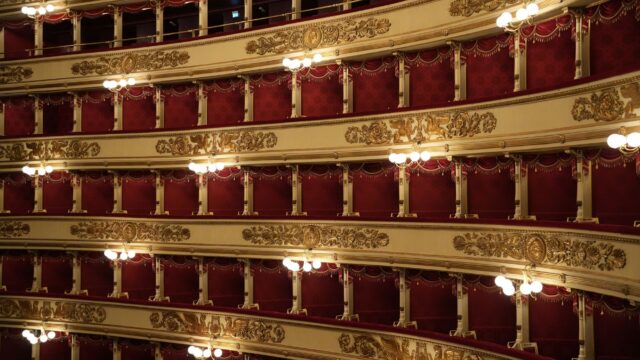
The city marks its patron saint with a holiday, and La Scala opens its season that night. See our guide to La Scala’s opening night on Sant’Ambrogio.
Checked against official sources in November 2026. Hours, prices and rules change: confirm on the official page before you go or apply.