Gian Galeazzo Visconti: How Milan Became a Duchy and Its Duomo Grew
Gian Galeazzo Visconti became Milan's first duke in 1395 and pushed work on the Duomo forward. His rise, conquests, death and the family behind him.
Milan became a duchy on Sept. 5, 1395, when Gian Galeazzo Visconti was crowned its first duke in the Basilica di Sant’Ambrogio. He had bought the title from Wenceslaus, King of the Romans, for 100,000 florins, and he used his power to expand a state across the Po Valley and to push forward work on the Duomo di Milano (Milan Cathedral). He died in 1402, and his territories split apart among his heirs.
Who were the Visconti of Milan?
The Visconti were the noble family that ruled Milan from 1277 to 1447, according to the Wikipedia list of the Visconti family. Their power began with Ottone Visconti (1207-1295), who was both Archbishop of Milan and lord of the city. Later lords included Azzone Visconti (1302-1339) and Bernabò Visconti (1323-1385), a soldier who was Gian Galeazzo’s uncle. A side branch, the Visconti di Modrone, carried the name on after the main line ended. The family also produced churchmen, among them Teobaldo Visconti (1210-1276), who became Pope Gregory X.
Their rule came long after Milan’s late Roman period, when the city gave its name to the Edict of Milan of 313 and had Ambrose as its bishop.
How did Gian Galeazzo take Milan?
Gian Galeazzo was born in Pavia on Oct. 16, 1351, the son of Galeazzo II Visconti and Bianca of Savoy. His father held the lordship of Pavia, and Gian Galeazzo became Lord of Pavia on Aug. 4, 1378. For years he shared rule over Lombardy with his uncle Bernabò, who held Milan.
In 1385 he removed Bernabò by a trick, according to the Wikipedia biography of Gian Galeazzo Visconti: he pretended to have turned devout and ambushed his uncle during a religious procession in Milan. Bernabò was jailed and died soon afterward, reportedly poisoned on his nephew’s orders. Gian Galeazzo’s rule as Lord of Milan dates from May 6, 1385.
Family ties ran through these events. His first wife, Isabelle of Valois, brought him the French title comte de Vertus, known in Italian as Conte di Virtù, the name he went by early on. After she died in 1372, he married his cousin Caterina Visconti, Bernabò’s daughter, on Oct. 2, 1380.
How far did his state reach?
After Milan he took Verona, Vicenza and Padua and soon controlled almost the whole Po Valley, including Piacenza. Padua slipped away in 1390, when it went back to Francesco Novello da Carrara. He became Lord of Pisa on Feb. 13, 1399. His list of lordships also included Cremona, Bergamo, Brescia, Novara, Como, Lodi, Parma and Vigevano, among others.
He spent 300,000 golden florins trying to divert the Mincio away from Mantua and the Brenta away from Padua, so that both cities would be exposed to his armies. His larger aim was a single kingdom across northern Italy, a revived Lombard state. Florence and Bologna, joined with other rulers in the League of Bologna, stood in his way. In 1402 he attacked them and beat the Bolognese at the Battle of Casalecchio on June 26 and 27.
What did he build, and what was his role in the Duomo?
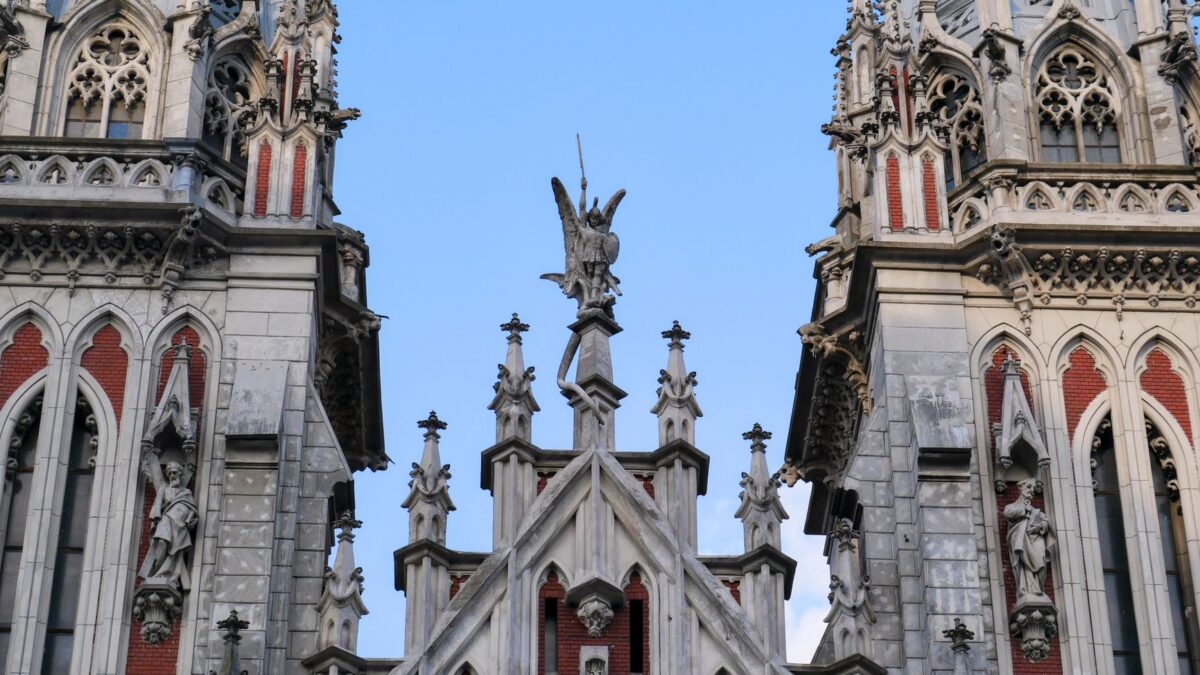
Gian Galeazzo is credited with furthering work on the Duomo of Milan, the Gothic cathedral on Piazza del Duomo that took centuries to finish. He was also the founding patron of the Certosa di Pavia, the monastery south of Milan where his tomb stands, and he completed the Visconti castle in Pavia that his father had begun. That castle was his residence, described as the grandest princely home in Italy, with a library he filled with scientific works and illuminated manuscripts, many taken in his conquests.
His government changed too. In 1400 he set up clerks and offices to improve public health, and with his chancellor Francesco Barbavara he is credited with an efficient new system of administration and bookkeeping.
The cathedral is still the center of city life: crowds gather in front of it on New Year’s Eve in Milan, and other places tied to the city’s past are covered in a list of museums in Milan beyond the Duomo.
Why did his duchy break apart?
He fell ill with fever at the castle of Melegnano on Aug. 10, 1402, and died there on Sept. 3, 1402, aged 50. His territories fragmented as his heirs fought one another, partly because his lands were divided among legitimate and illegitimate children. His son Gian Maria (1388-1412) succeeded him as duke, followed by Filippo Maria (1392-1447), the last Visconti duke of Milan.
Abroad, he had quarreled with France. He opposed French control of Genoa and threatened war over the treatment of his daughter Valentina, Duchess of Orléans, who was forced out of Paris in 1396. Queen Isabeau of Bavaria, wife of Charles VI, was a granddaughter of Bernabò and an enemy of Valentina and her father.
Quick answers
Who was the first Duke of Milan?
Gian Galeazzo Visconti, who held the title from Sept. 5, 1395, until his death on Sept. 3, 1402.
How long did the Visconti rule Milan?
From 1277 to 1447, ending with Filippo Maria Visconti.
Where is Gian Galeazzo Visconti buried?
His tomb is in the Certosa di Pavia, the monastery he founded.
Where was he crowned?
In the Basilica di Sant’Ambrogio, the church linked to Saint Ambrose, Milan’s patron saint.
Checked against official sources in November 2026. Hours, prices and rules change: confirm on the official page before you go or apply.