Saint Ambrose of Milan: The Patron Saint Behind the Dec. 7 Holiday
Milan celebrates Saint Ambrose on Dec. 7, the day he was consecrated bishop in 374. How a Roman governor became bishop and patron saint, and where to see his basilica.
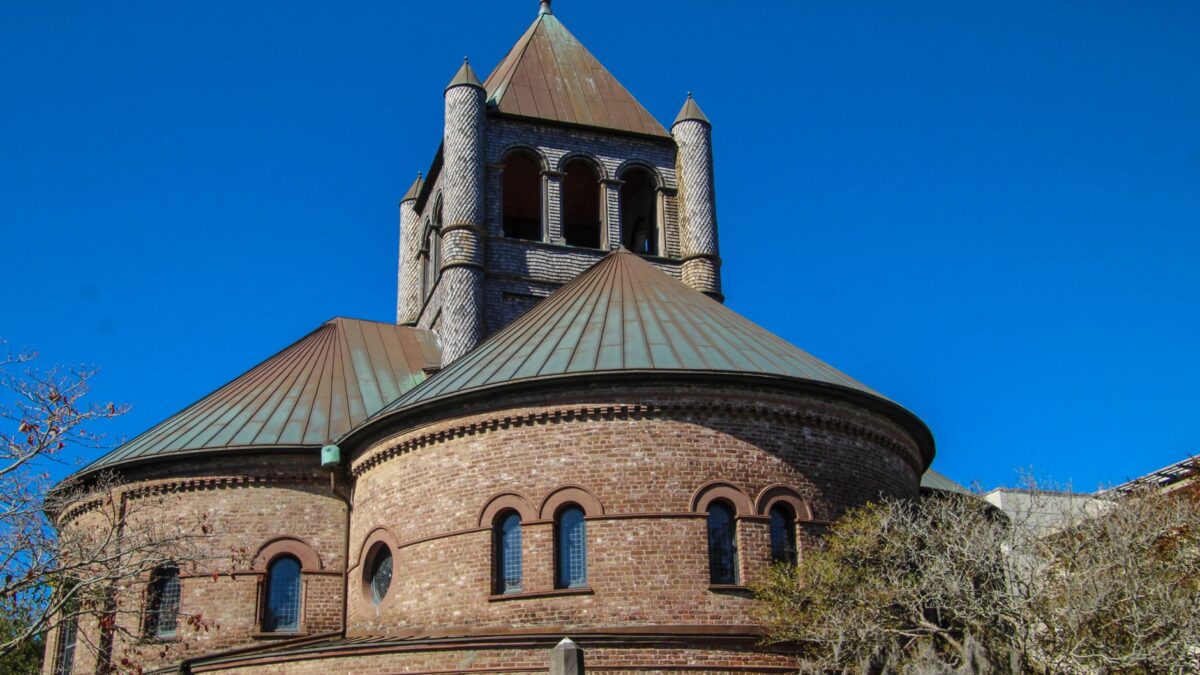
Saint Ambrose (Sant’Ambrogio in Italian) was Bishop of Milan from 374 until his death on April 4, 397, and he is the patron saint of the city. Milan marks his feast day on Dec. 7 because that is the date in 374 when he was consecrated bishop. He was buried in the crypt of the basilica that now carries his name, and that church is still the main place connected with him in Milan.
Who was Saint Ambrose?
Ambrose was born Aurelius Ambrosius around 339 in Augusta Treverorum, the Roman city that is now Trier in Germany, according to Wikipedia’s biography of Ambrose. His family was Roman, Christian and of Greek descent. Historians disagree on who his father was: some name a praetorian prefect of Gaul called Aurelius Ambrosius, while others point to an official named Uranius. Either way, his father worked at the top of the Roman administration in Gaul.
He was the youngest of three children. His brother Satyrus and his sister Marcellina are also venerated as saints. After his father died, his mother moved the family to Rome, where Ambrose studied literature, law and rhetoric. He then entered public service, and around 372 he became governor of the province of Liguria and Emilia, based in Milan. At the time Milan was a capital of the Western Roman Empire, a story told in our piece on how Roman Mediolanum rose to power.
How did a Roman governor become bishop?
In 374 Auxentius, the bishop of Milan, died. He was an Arian, a follower of a Christian teaching that rejected the Nicene Creed, and the Arian party contested who would succeed him. Ambrose went to the church where the election was held to keep order. While he was speaking, someone shouted “Ambrose, bishop!” and the whole crowd took up the call.
Ambrose held Nicene beliefs, but the Arians accepted him because he had treated their views fairly. He refused the post at first and said he was not ready for it, since he had only recently become a Christian. He was chosen by popular acclamation all the same and consecrated on Dec. 7, 374, the date that later became his feast day.
What did he do as bishop?
As bishop, Ambrose defended Nicene orthodoxy against Arianism. He also tried to mediate between the emperors Theodosius I and Magnus Maximus, opposed the execution of the Priscillianist heretics, and later excommunicated Theodosius after a massacre. His reported view was that “an emperor is within the church, not over it.”
He wrote a great deal. His works include De Virginibus (377), De Sacramentis, which holds the earliest witness to the Roman Canon of the Mass, the treatise De officiis ministrorum on the conduct of clergy (written between 377 and 391), and the Exameron (between 386 and 390). He wrote at least four hymns, among them “Veni redemptor gentium,” which are the core of the Ambrosian hymns. He also helped convert Augustine of Hippo to Christianity.
The Western church counts him with Augustine, Jerome and Pope Gregory the Great as the four Great Latin Church Fathers, and he was formally declared a Doctor of the Church in 1298. Catholics, Eastern Orthodox, Anglicans and several Lutheran churches venerate him as a saint.
Why is he the patron saint of Milan and of beekeepers?
Ambrose led the church in Milan for more than two decades, built several of its early churches and was buried in the city, which is why Milan took him as its patron. He is also the patron saint of beekeepers. A legend says that when he was a baby, a swarm of bees settled on his face in the cradle and left a drop of honey, which his father read as a sign of future eloquence. Bees and beehives often appear in images of him.
Why is Dec. 7 a holiday in Milan?
Dec. 7 is the feast day of Ambrose and the anniversary of his consecration as bishop in 374. Because he is the city’s patron saint, Milan treats the day as its local holiday, and many offices and services follow holiday schedules. The next day, Dec. 8, is a national holiday in Italy, so the two days often run together. Our guide to what is open in Milan from Dec. 8 to Jan. 6 covers the wider holiday season. Check the official page of any office or service before you go on Dec. 7.
Where to see his basilica in Milan
The Basilica of Sant’Ambrogio is one of the oldest churches in Milan. Ambrose commissioned it between 379 and 386 in an area where many martyrs of the Roman persecutions had been buried, and it was first called Basilica Martyrum before being renamed in his honor. He also built Basilica Apostolorum (now San Nazaro in Brolo) and Basilica Virginum (now San Simpliciano).
The church you see today is Romanesque. Work on it began around 1080, the nave dates to about 1128 and its rib vaults to about 1140. It stood outside the Roman walls at first, and the city later grew around it. A monastery was set up on the grounds in 789, and for centuries monks and canons shared the site, each group with its own bell tower. The plain Torre dei Monaci (Tower of the Monks) is from the 9th century, while the taller left tower dates from 1144, with its top two floors added in 1889. In 1492 the Benedictines asked Donato Bramante to renovate the rectory, and on Aug. 4, 1528, the Peace of St. Ambrose between the city’s noble and popular factions was signed there. Allied bombing in August 1943 badly damaged the apse.
Inside, the altar is roughly where it was in Ambrose’s time, and the columns of the ciborium over it still stand on the original pavement. His body rests in the crypt.
Quick answers
When did Saint Ambrose live?
He was born around 339 in Trier and died in Milan on April 4, 397. He was bishop of Milan from 374.
Where is Saint Ambrose buried?
He is buried in the crypt of the Basilica of Sant’Ambrogio in Milan, the church he commissioned between 379 and 386.
Why is Ambrose linked with bees?
A legend says bees settled on his face as a baby and left a drop of honey, read as a sign of his future eloquence. He is the patron saint of beekeepers.
Was Ambrose a priest before he became bishop?
No. He was the Roman governor in Milan and a fairly new Christian when the crowd at the 374 election called for him to become bishop.
Checked against official sources in November 2026. Hours, prices and rules change: confirm on the official page before you go or apply.