Panettone in Milan: Where It Comes From and What Goes Into It
Panettone is Milan's Christmas cake, first recorded in Lombardy in 1599. Its history, the Motta and Alemagna story, ingredients and how to shop for one.
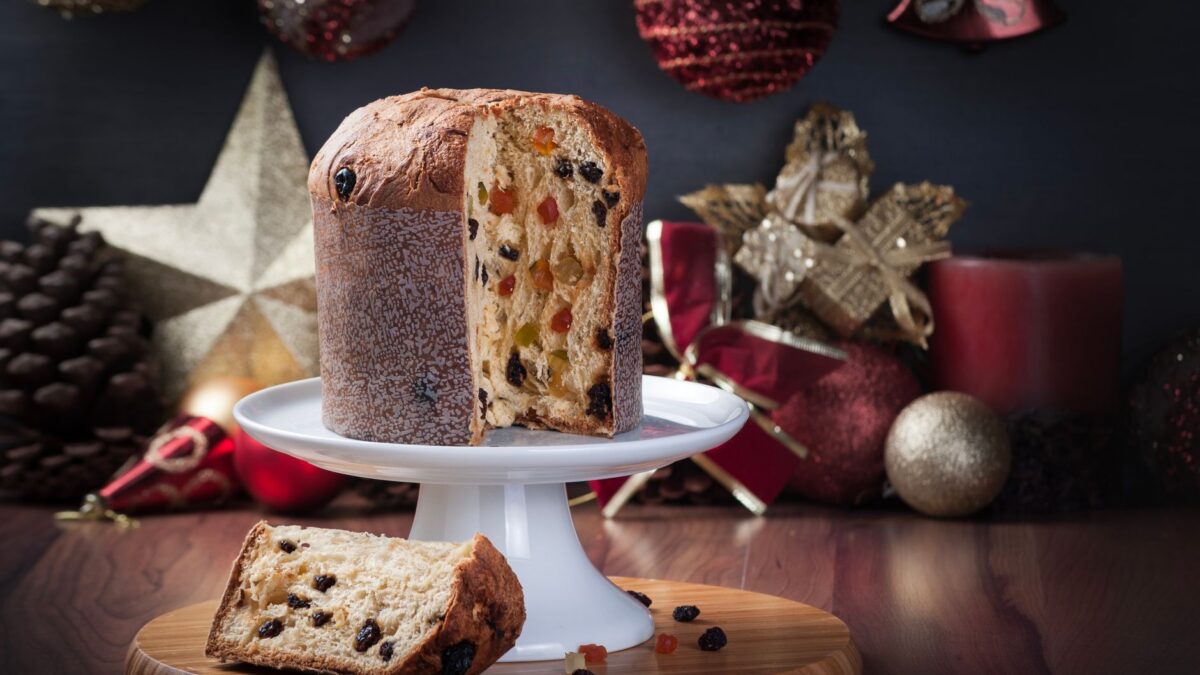
Panettone is a tall, domed sweet bread studded with raisins and candied fruit, and Italians treat it as a dessert eaten at Christmas and New Year. Every historical account in Italy places its birth in Milan. The oldest firm written record dates from 1599 in Pavia, and the cake as most people know it today, light and high, took shape in Milan in the early 20th century.
The history below follows the Wikipedia article on panettone. For this December’s shops, label wording and prices, check directly with the bakery or store before you buy.
Where does the name panettone come from?
The word comes from Milanese dialect. Panattón is a “big” form of pan, meaning bread, or of panett, a small bread made with a lot of yeast. The Italian ending -one turns it into “large bread.” In the 18th century, the Enlightenment writer Pietro Verri called it pan de ton, or luxury bread, and his writings are the first to link it with Christmas.
How old is panettone?
Food historian Francine Segan says the cake was “probably” created in the 15th century. It may appear in the recipe book of Bartolomeo Scappi, a chef who cooked for popes and emperors in the early 16th century, though that is not certain.
The clearest early evidence is an expense register from the Borromeo college in Pavia, in Lombardy. On Dec. 23, 1599, the college recorded buying 5 pounds of butter, 2 pounds of raisins and 3 ounces of spices for a baker, who used them to make 13 loaves handed out to students on Christmas Day.
The first printed recipe appeared in the third edition of Giovanni Felice Luraschi’s Nuovo cuoco economico milanese, from 1853. At that time many people in Milan could not afford panettone. A purchase recorded in 1874, a small panettone and 200 grams of sugared almonds from a pastry shop, cost 2.35 lira, roughly €9 in 2020 money.
What about the legends of Toni?
Milan has several stories about how panettone was invented, all set around a baker called Tony. In the best-known version, set in the 15th century, a rich Milanese noble wanted to marry the baker’s daughter. He paid for the best flour, eggs, raisins, candied citrus and sugar, the baker turned them into a rich bread that sold very well, and the bread was named pan di Tonio. The noble won his bride.
A second version swaps the roles: Tony the baker wants to marry a noble’s daughter, makes panettone to impress her father, and is rewarded with his approval and a bakery of his own. These are tales, and other northern Italian cities have their own claims. The cookery writer Ada Boni noted in 1969 that Venice and Turin had their own panettone and Genoa its pandolce.
How did Milan’s panettone become the national cake?
Two Milanese bakers turned it into a mass product in the early 20th century. Angelo Motta began making his own brand in 1919. He gave panettone its tall dome and airy crumb by letting the dough rise three times over almost 20 hours before baking. Gioacchino Alemagna adapted the recipe around 1925 and started the brand that still carries his name. Their rivalry led to industrial production.
In the 1970s, television advertising carried panettone into southern Italy. Nestlé bought the Motta and Alemagna brands in the late 1990s, and Bauli, a bakery company from Verona, later bought them from Nestlé. By then Italians ate panettone all year, not only at the holidays. By the 2010s, artisan panettone and versions with local flavors, such as one made with limoncello in Campania, were valued above factory-made cakes in the south.
As of 2007, there were efforts to win protected designation of origin (PDO) and DOC status for panettone.
What goes into a panettone?
A classic panettone uses flour milled from hard wheat, with raisins and pieces of candied orange and citron spread through the dough. Some versions replace or add almonds, chocolate or other dried fruit such as apricots. Some bakers have also moved to wild yeast instead of commercial yeast, following an Italian bakery that had success with it.
How to shop for panettone in Milan
Shops, label wording and prices vary, so compare what you see in person. Look at the ingredient list for the classic ones above (hard-wheat flour, raisins, candied orange and citron), ask whether a cake is made by an artisan bakery or industrially, and check the price and weight on the label. Pastry shops and supermarkets both sell panettone in the weeks before Christmas, and Milan’s Christmas markets are another place to look. If you plan to buy around the holidays, check holiday opening hours in Milan first.
Quick answers
Is panettone from Milan?
Yes. Historical accounts in Italy agree that it began in Milan, although Venice, Turin and Genoa have their own festive breads and claims.
When is panettone eaten?
Mainly at Christmas and New Year, though in Italy it is now eaten throughout the year.
Who made the modern tall panettone?
Angelo Motta, who started his brand in Milan in 1919 and used a long, three-stage rise of almost 20 hours.
Is panettone popular outside Italy?
Yes. In Peru, where it is called panetón, consumption passed Italy’s by the end of the 2010s, with one survey putting the average at 2.4 lb (1.1 kg) per person a year.
Checked against official sources in November 2026. Hours, prices and rules change: confirm on the official page before you go or apply.